Evidence Brief · AI Infrastructure · September 2026
The AI Demand Evidence Ladder
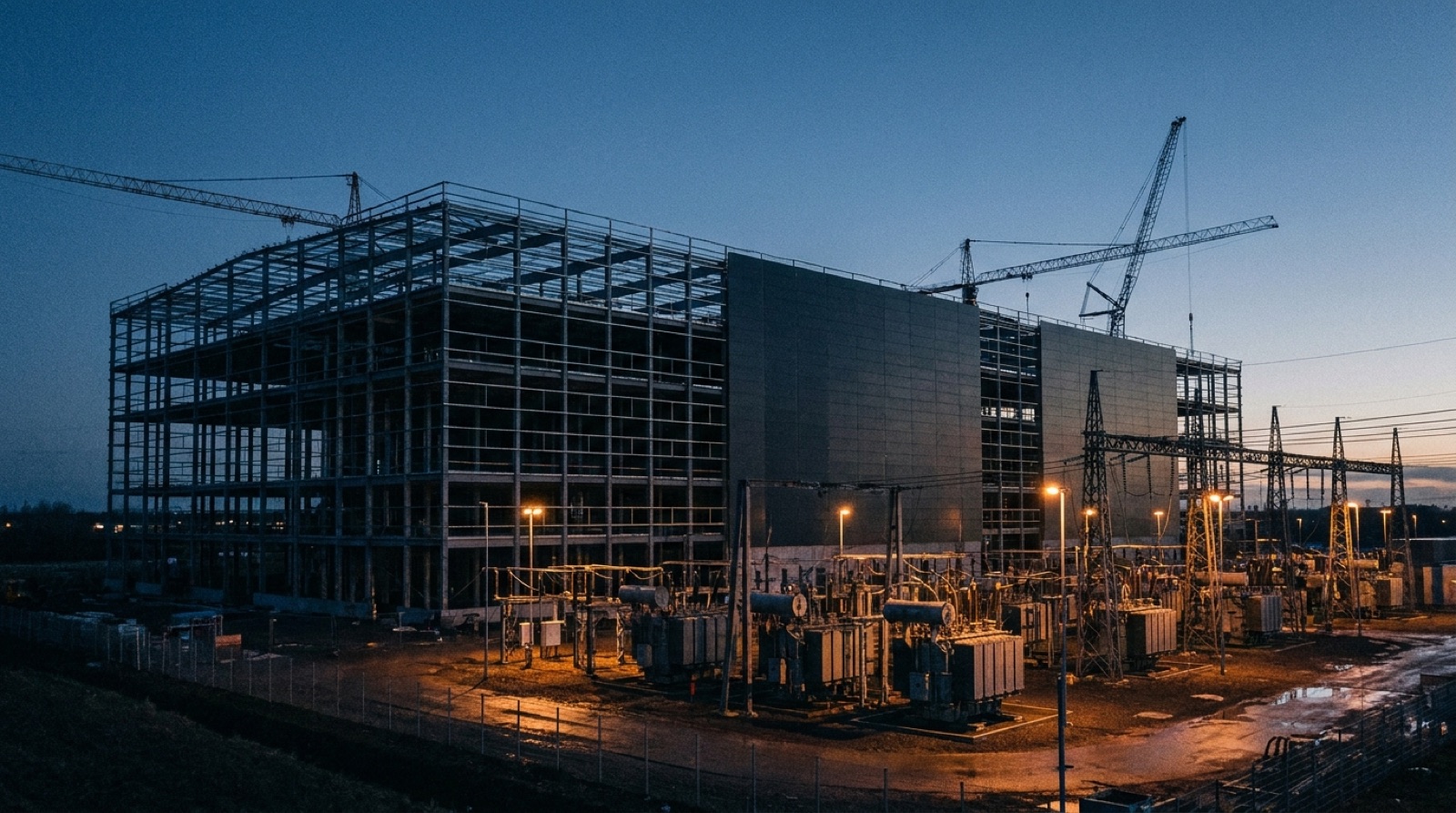
A market can reprice an AI-related stock in minutes. The evidence needed to revise a business thesis usually arrives much more slowly. This note turns that mismatch into a practical research tool: five layers of evidence, ordered from the fastest and least economically conclusive to the slowest and closest to supplier revenue. It was prompted by the September 14 selloff, but it is designed to outlast that session.
The ladder
| Layer | What it can establish | What it cannot establish alone | Evidence to watch |
|---|---|---|---|
| 1. Narrative Public statements, policy, safety debate | That the range of possible outcomes or perceived risk has changed | That deployed compute or supplier demand has fallen | Company statements, regulation, lab roadmaps |
| 2. Budget Capital-allocation plans | That a buyer intends to spend more or less | That the capacity is already online or earning a return | Capex guidance, financing plans, board approvals |
| 3. Deployment Physical capacity | That power, land, equipment, and construction are progressing | That capacity will be fully used or priced attractively | Data-center completions, energized megawatts, lead times |
| 4. Utilization & price Use of installed capacity | That customers are consuming compute at a useful rate | That every supplier captures the same economics | Cloud growth, inference volumes, pricing, unit economics |
| 5. Supplier economics Orders and reported results | That demand has reached a particular supplier's P&L or cash flow | That the result will persist without checking the next cycle | Backlog quality, bookings, margins, guidance, receivables |
How to read it. The layers are a causal sequence, not a five-point score. A company can have a strong budget signal and weak utilization. A supplier can report strong revenue from earlier orders after a buyer's next budget has softened. The point is not to make every question linear; it is to stop using the wrong evidence to answer it.
Why the September 14 move belongs mostly on the first layer
Reuters reported that public calls for a more deliberate pace of frontier-AI development contributed to a broad selloff in AI-linked stocks. The Associated Press reported that oil and a brief move in the 10-year Treasury yield to 5% added a separate valuation pressure. Those are real market facts. They establish a changed narrative and a changed discount-rate environment. They do not, on their own, establish that a hyperscaler has cut capex, a data center has been delayed, a cloud has lower utilization, or a supplier has lost orders.
What I would treat as a real escalation
The relevant escalation is not another volatile session. It is a move down the ladder. A reduced capex plan moves the question to Layer 2. A documented delay in energizing or building capacity moves it to Layer 3. Lower cloud consumption, falling realized prices, or weaker utilization moves it to Layer 4. A supplier citing pushed-out orders, reduced backlog conversion, or lower guidance moves it to Layer 5. Each is more economically direct than the one before it.
This also prevents a common error in the opposite direction: dismissing every concern until a quarterly earnings release arrives. Narrative and budget evidence can matter early because capacity decisions are long-lived. They should change the questions and the range of outcomes. They should not be relabeled as results before the operating data has earned that conclusion.
How this changes the existing AI-infrastructure research
The AI Capex Reality Check asks whether hyperscaler spending can be justified by cash generation and eventual revenue. Data Center Alley asks where the physical bottleneck lies. Inside PJM's Capacity Crunch asks what power scarcity does to the cost base. This brief supplies the connective tissue: a way to identify which of those premises has actually changed when the market moves first.
A standing checklist
Name the claim
Is the concern about model progress, spending, construction, use, or supplier results? Write it in one sentence before looking for confirming news.
Match evidence to claim
Use a budget disclosure to answer a budget question. Use order and guidance data to answer a supplier-demand question. Keep the inference labeled as an inference.
Set the next observable test
State the next report, metric, or disclosure that would confirm or disprove the reading. A thesis that cannot be checked is only a story.