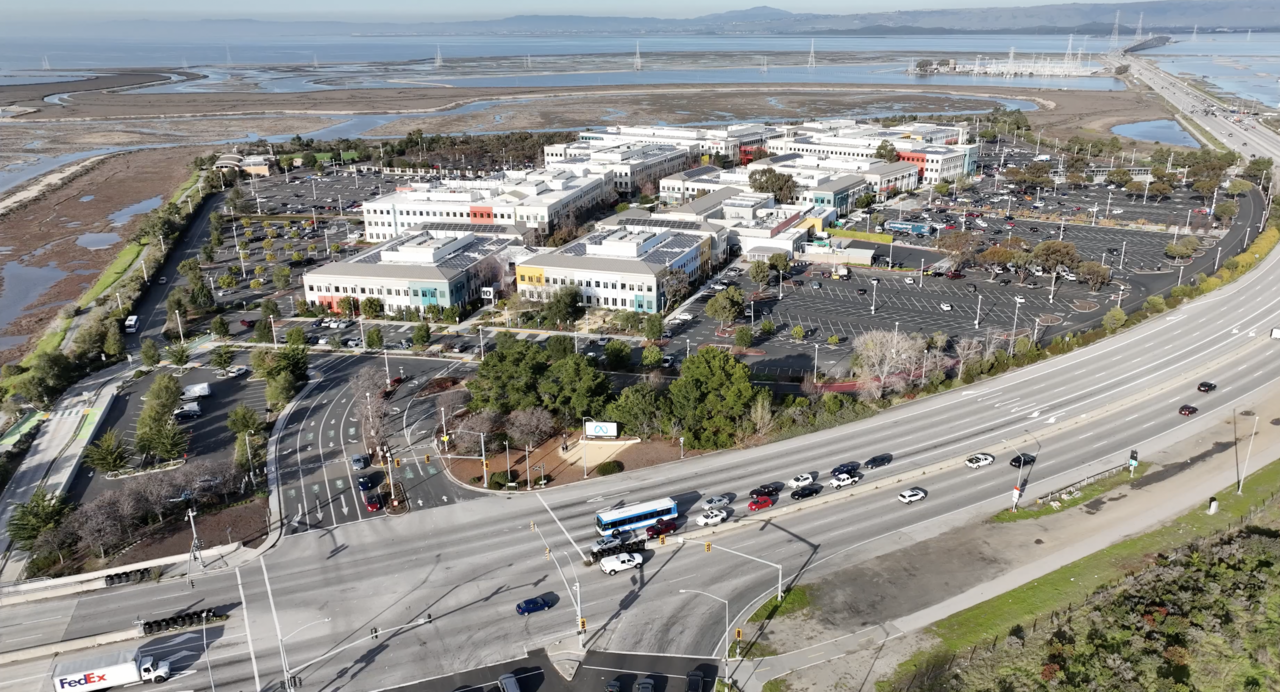

Technology shares fell sharply Thursday after Meta’s results reignited concern about the capital required for the AI buildout. Reuters reported that Meta’s revenue exceeded expectations, but spending produced its first cash outflow in more than a decade.
The company also described plans involving non-voting shares to raise capital. Reuters reported a 7% decline in Meta and a 2.6% drop in the Nasdaq. The Dow finished with a small gain, underlining the concentration of the damage in technology-linked shares.
The business still generated cash. Investment used more.
Meta’s own release gives the distinction a precise accounting basis. Revenue was $64.60 billion, up 26% from a year earlier. Operating cash flow was $32.79 billion. Capital expenditure, including principal payments on finance leases, was $34.91 billion, leaving reported free cash flow of negative $2.12 billion. Negative free cash flow here does not mean the core operations stopped generating cash.
The release also identified a $9.89 billion litigation-related charge. That matters when comparing reported operating performance with the economics of infrastructure investment: an unusual legal expense and recurring capital requirements should not be treated as the same cost.
One earnings day, different stock-market verdicts
Closing percentage changes; October 22, 2026
Read chart data as a table
| Measure | Value |
|---|---|
| Meta | -7 |
| Tesla | -3.1 |
| Nasdaq Composite | -2.6 |
| Procter & Gamble | 5.6 |
Other earnings reports did not produce one uniform interpretation. Tesla fell despite positive free cash flow and lower planned capital spending. Procter & Gamble rose after beating expectations, even as it warned about cost pressures, according to Reuters.
The session’s dividing line was not simply whether companies beat consensus. Investors were weighing the quality of the result, the cost of the next growth phase and the funding shareholders might have to provide. A stronger income statement did not guarantee a more comfortable cash-flow outlook.
A new share class is not the same as an immediate capital raise
The company’s announcement described a new non-voting Class C share class and a planned stock dividend. The dividend itself does not inject cash into the company. The financing flexibility comes from the ability to use the new class for future capital raising, compensation, acquisitions and other purposes.
For an existing shareholder, that distinction changes what must be modeled. A proportional stock dividend changes the units in which ownership is expressed. A subsequent issuance to new investors can change the division of ownership. The eventual effect depends on transactions and terms that should not be assumed merely from the creation of the class.
The market’s immediate response combined concern about spending with concern about funding. The company’s financial statements provide a narrower, more useful starting point: substantial cash generated by operations, an even larger investment bill, and a capital structure designed to preserve flexibility for what comes next.
The ad engine and the spending engine are moving at different speeds
The operating details show why a simple story about weakening demand would be misleading. Meta reported a 10% increase in advertising impressions and a 14% increase in average price per ad. The company was selling more advertising and receiving more for the average ad. Its daily audience also grew. Those measures put the investment debate inside a business that was still expanding, rather than one searching for a replacement for collapsing sales.
They do not isolate the financial return on the newest AI models. Better recommendations, changes in the advertising mix and other operating developments can affect the figures. Management attributed benefits to AI, but the release did not provide an independently measured return on each category of infrastructure spending. The gap between those two kinds of evidence is the center of the shareholder debate.
For an advertiser, improved targeting may make a campaign worth more. For Meta, the relevant calculation also includes the cost of providing that improvement. A stronger advertising result can coexist with a period in which the incremental investment consumes more cash than it currently produces. That makes the timing of the return important even if the technology eventually works as intended.
The margin comparison contains a large legal item
Reported operating margin fell to 20% from 40% a year earlier. The litigation charge prevents that comparison from being read simply as a measure of rising computing costs. Meta supplied a reconciliation showing operating income excluding the charge, allowing investors to distinguish the legal item from the rest of the quarter.
The distinction cuts both ways. Treating the full margin decline as AI operating deterioration would overstate what the statements establish. Removing the charge and then ignoring the obligation would understate a cost shareholders bear. Neither adjustment changes the separately reported capital bill.
That leaves three different financial effects: the performance of the advertising operation, the unusual legal expense and the money committed to assets used over future periods. Combining them into one claim about “AI costs” loses information. Separating them does not make any of them disappear.
The next year is not yet a budget investors can model with precision
Meta narrowed its 2026 capital-spending outlook to $135 billion–$145 billion and said investment would remain aggressive beyond the year. It had not provided a complete 2027 revenue outlook. The release therefore supplied more information about the direction of commitments than a definitive schedule of their payback.
For shareholders, the unresolved variable is not whether management sees opportunity. It is how quickly the expanding infrastructure supports durable cash receipts relative to its cost. The company can fund a period of negative free cash flow from its existing resources. That capacity buys time; it does not determine the eventual return on the money deployed.
The stock’s decline put a market price on that uncertainty. It was not proof that the projects would fail. It was evidence that an earnings beat, on its own, was no longer enough to settle the financing question.